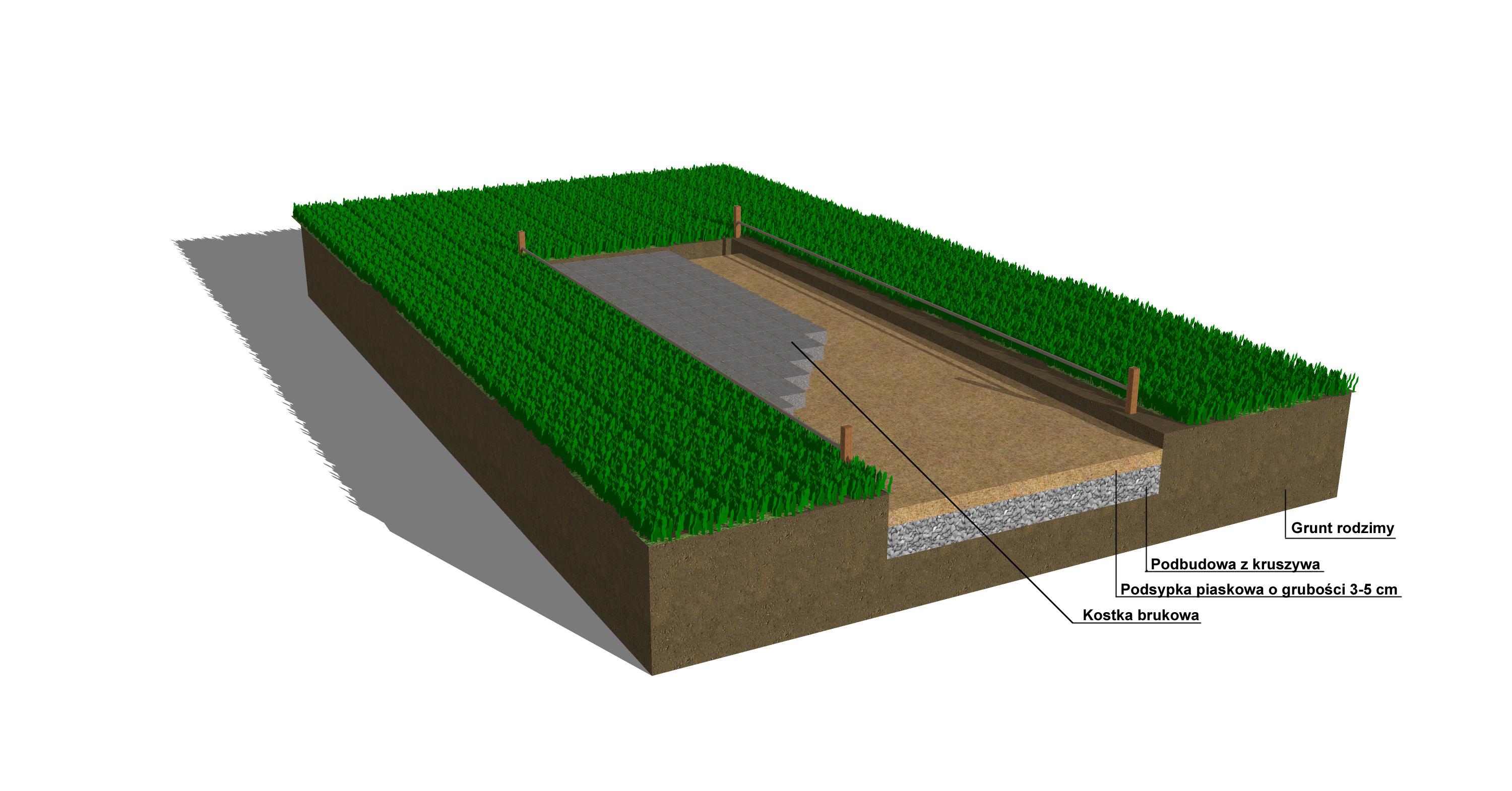
A. Remove the topsoil (top layer of soil) to the correct level. Level and compact the base of the excavated trench.
B. Construct the appropriate type of sub-base for:
1. Pavements, cycle paths, pedestrian walkways
–Polbruk
e, 6 cm thick, tiles, 5 and 7 cm thick –
sand bedding, 3 cm thick –
gravel sub-base (compacted), 5 cm thick
2. Residential roads
–Polbruk
(concrete base), thickness 8 cm–
cement-sand bedding, thickness 3 cm–
B-7.5 concrete sub-base (or crushed stone), thickness 10 cm
3. Roads
–Polbruk
, thickness 8 cm and 10 cm–
cement-sand bedding, thickness 3 cm–
B-10 concrete sub-base (or crushed stone), thickness 15 cm

C. The ‘Polbruk’ pavers are laid on the prepared sub-base according to the previously selected pattern. ‘Polbruk’ pavers have protrusions that allow for a joint thickness of approx. 3 mm. If necessary, the pavers should be cut using suitable guillotine cutters or concrete saws.
D. After laying, Polbruk should be compacted using a plate vibrator fitted with a vulcanised rubber or rubber plate.
E. Fill the resulting joints with dry, sieved sand of 0–3 mm grain size, e.g. by sweeping it in with a brush.
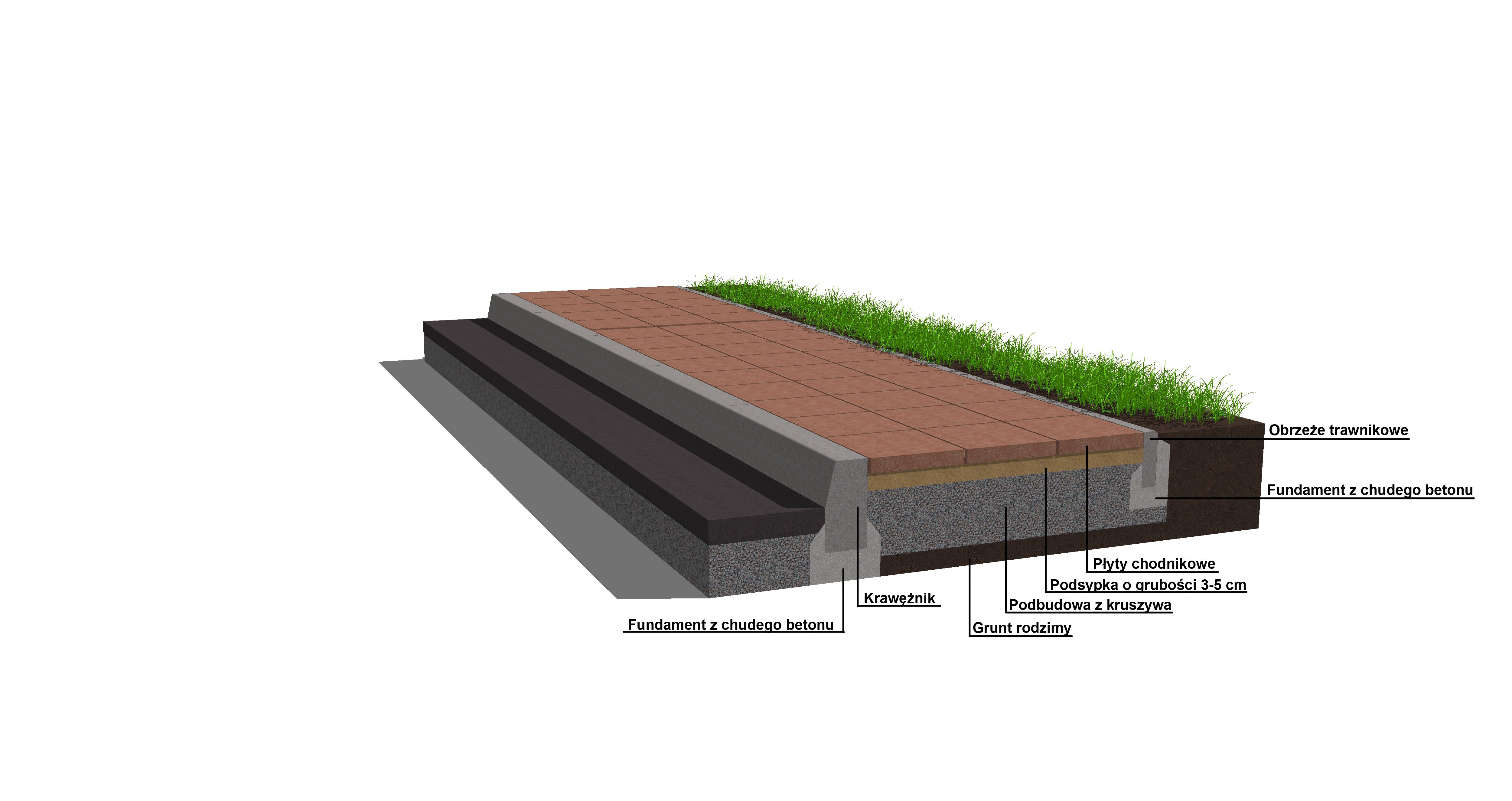
Note! The above methods for constructing sub-bases apply only to the laying of paving blocks on sandy and gravelly soils. In the case of clay soils, a drainage layer (20 to 60 cm) must also be installed. To determine the specific guidelines for paving, please contact construction and roadworks companies. A properly constructed sub-base made of suitable material and the laying of pavers in accordance with best practice are the fundamental conditions for the durability of a paver surface.
