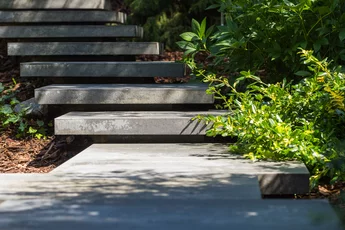
Soil as it should be Soil classification will provide us with information on soil stability. The contractor should be aware of this data before work begins. Sometimes we will be dealing with weak ground that requires reinforcement through a sub-base or foundation. It is essential to ensure that, in future, seasonal changes do not lead to ground subsidence, a rise in the groundwater level and the associated problems.
Stairs from scratch
When starting work, we must remember to excavate the soil at the site where the stairs will be built. The next step is to create a sand-cement backfill. On weaker subsoils, it will be necessary to construct a sub-base using dry concrete. An alternative solution could be a cement backfill, which will strengthen and compact the ground.
Step by step
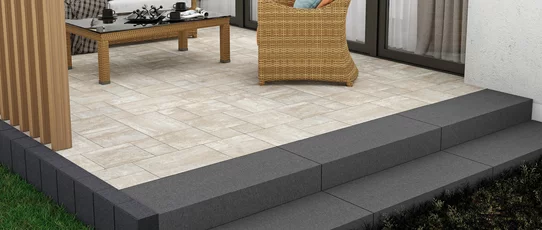
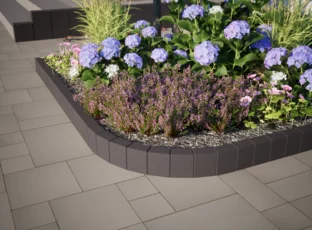
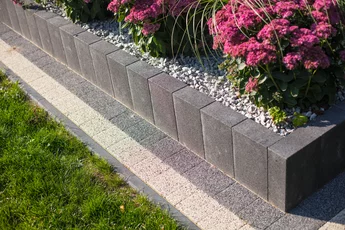
The number of steps will depend on the difference in height between the two locations. It is best to adjust the depth of each step to a multiple of the paver size. This will eliminate the need to cut the material to size and improve the staircase’s appearance. Precision translates into aesthetics, long-term comfort of use, and user safety. We begin laying the steps with edging elements (for example: palisades, edging strips); some shapes allow for the free creation of arches and semicircles. It is best to set the edging on dry or semi-dry concrete. It is important not to fix them directly into the ground. Next, we lay the pavers. It is worth remembering to use a white hammer with light-coloured stones, as this will not leave marks.
Final
result Once the pavers have been laid, the gaps between them should be carefully filled with clean, washed sand. This does not contain seeds, so there will be no subsequent problems with weeds growing in the joints. The surface should be covered with sand several times and swept (jointing) and then watered (slurrying). On small areas, we do not use compactors, which will protect the surface from damage.