Elegant, aesthetically pleasing, stylish, and durable—that’s what every property’s fence should be. Fences made of concrete blocks combine all these features. Why should you choose them?
A fence is a very important element of any property. It protects our privacy, provides a sense of security, and contributes to the aesthetics of the entire landscape, but it is also the first thing that greets our guests. For this reason, it should be made of materials that meet all these expectations. A fence can be built traditionally—from wood or stone—but also from metal panels or in the form of gabions. There are also hybrid solutions, where a single material is used for the posts, while the panels are made of wood, metal, glass, or plastic. The possibilities are truly numerous. However, concrete blocks are particularly worth considering. A fence built from them will serve us for many years. It will not require frequent maintenance or upkeep, as is the case with wood, metal, or glass. The fact that this is a good solution is also evidenced by the speed and simplicity of construction, the stylish and versatile design of the fence elements, as well as the wide range of design possibilities.
Speed and Ease of Construction
A huge advantage of building a fence from hollow blocks is that it can be completed very quickly. We start by staking out the fence’s layout on the ground. In doing so, we must take into account future elements such as side gates, the main gate, or a trash shed. It’s also worth determining the height of the foundation and the entire fence, as well as the number and length of the fence panels (if it won’t be a solid fence). The second step is to pour the foundation. The trench for such a structure should be 80 to 140 cm deep, depending on the depth of the frost line in the specific geographic region. The width of the trench should be slightly greater than that of a concrete block, and it is recommended that it be at least 30 cm. Next, we build the formwork for the reinforced concrete footing. Its height is at least 30 cm, and its width should not exceed the width of the wall itself. Place the rebar in the trench. Its purpose is to reinforce the foundation and to provide a structure for the future posts. Next, pour C20/C25 concrete into the excavation up to the height of the formwork. Then, level the concrete surface and install a horizontal waterproofing membrane. This prevents capillary moisture from seeping up and protects the fence from damage on the side facing the ground. The next step is to install the concrete block fence using the wet method. We fill the cavities of the blocks with C20/25 concrete and stack them on top of one another. As a finishing touch, it’s a good idea to install caps on top of the fence to allow water to drain away and prevent it from seeping into the blocks. These are installed two days after the wall is completed, using tile adhesive and outdoor-grade silicone. If the fence is to have openings, special anchors should be installed in the posts to allow for their installation.
A Stylish and Versatile Design
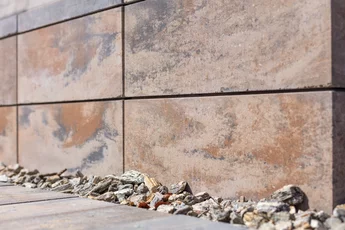
As you can easily see, building a fence from concrete blocks goes fairly quickly. Another advantage is their versatile and interesting design. Fence blocks such as those at Neo are an ideal solution for modern designs. Neo features a minimalist design with a raw concrete look, available in two shades of gray: steel and graphite. The Murro block in steel and graphite will also look great as a fence for a modern home, although it has a much wider range of stylistic applications. This is mainly because it’s also available in three melange finishes—nerino, onyx, and latte—in which it somewhat resembles the pattern of stone, despite its smooth texture. Murro It fits well in modern interiors, but can also be successfully used in Scandinavian, Japanese, and even Mediterranean-style homes—though the latte color seems best suited for the latter.
Unlimited possibilities
Concrete blocks, as a material for building fences, have another advantage. You can use them to build a solid wall or a fence with openings. This allows you to tailor the fence to your home and the surroundings of your property. If you want to maintain privacy or shield yourself from a busy street, it’s worth building a solid wall out of concrete blocks. It will also serve as a sound barrier. The downside of this solution is that it shades part of the lot, which can adversely affect plants near the wall and limit your plant selection to shade-tolerant species. It’s worth considering hybrid solutions, where we use hollow blocks to build posts to which we attach openwork panels. To some extent, this will protect our privacy, while also allowing light to reach the garden or entryway—which is beneficial for plants. Installing panels between the posts also offers the opportunity for an interesting fence finish. Elements made of wood, metal, glass, or composite materials are available on the market. In addition to traditional panels, you can find many unique solutions with interesting designs, such as metal elements with laser-cut or forged patterns. This provides virtually unlimited possibilities for combining concrete block posts with a wide variety of panels. When choosing an openwork fence, it’s worth keeping plants in mind, as they too can effectively screen us from the street or neighbors. Opposite the fence panels, simply plant tall grasses, evergreen laurels, or beeches spaced 20 cm apart in a single row. Over time, such a hedge planted along the fence will frame the garden beautifully and transform it into a green oasis.
All these features make fences built with concrete blocks an excellent—both functional and aesthetic—solution for any property. You just need to make sure their appearance is consistent with the design of the rest of the property.